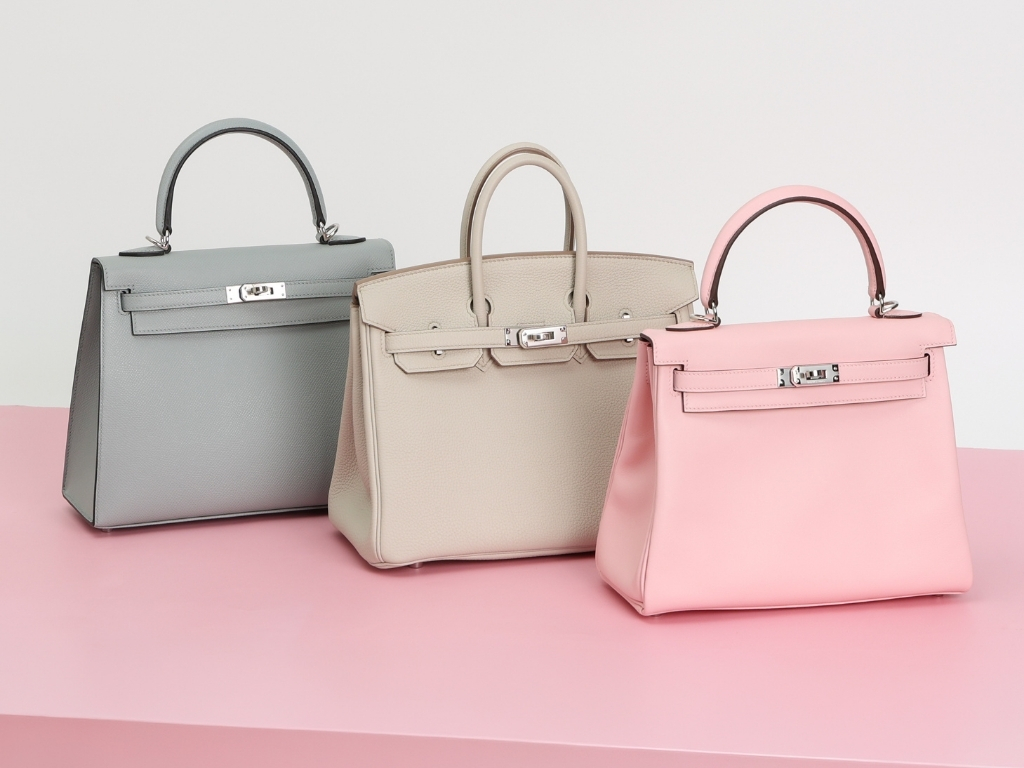
As the luxury resale market continues to grow, counterfeit Hermès products have become increasingly sophisticated. Many consumers search online for terms such as “authentic vs.fake,” “how to authenticate Hermès,” or “Hermès authentication methods,” hoping to determine authenticity using a few simple tips.
In reality, professional Hermès authentication involves far more than checking one or two details.
For high-value items worth hundreds of thousands or even millions of Japanese yen, reliable authentication generally requires a comprehensive assessment across multiple dimensions. Ultimately, it is recommended that such items be evaluated by a professional authentication team.
In the past, some counterfeit products showed obvious flaws in areas such as stitching, hardware, or stamps.
However, as counterfeit manufacturing techniques have become increasingly sophisticated, it is now much more difficult to accurately determine whether a Hermès item is authentic based solely on a few “authentication tips” found online.
For this reason, professional authentication does not rely on a single characteristic. Instead, it involves a comprehensive analysis from multiple perspectives.
Hermès authentication cannot be determined based on a single characteristic. In a professional authentication process, the entire bag is examined from multiple perspectives to determine whether its individual features are consistent with one another and whether the item as a whole maintains overall consistency.
Manufacturing specifications can also vary depending on the production year and model.
Therefore, authentication requires not only knowledge of the brand, but also extensive reference data from genuine items and years of hands-on authentication experience.
Professional authentication teams do not focus on just one detail. Instead, they typically assess multiple factors together.
The first step is to examine the bag's overall proportions, structure, and balance.
Professionals also check details such as whether the stitching is even, whether the stitch spacing is consistent, and whether the overall craftsmanship aligns with Hermès standards.
Because manufacturing details can vary depending on the production year and model, each item must be evaluated according to its specific specifications.
Hardware is another important area examined during professional authentication.
Professionals typically assess:
They also check whether these elements are consistent with the item's overall manufacturing specifications.
The condition of hardware may change naturally over time. Therefore, authentication takes into account not only how the hardware would appear when new, but also changes that may result from use and the item's production year.
Hermès stamps are another important area examined during authentication.
Professional teams typically check:
They then assess whether these characteristics are consistent with the manufacturing characteristics of the relevant production year and batch.
Therefore, authenticity cannot be determined based solely on the stamp itself or on one specific characteristic of the stamp.
Hermès uses a wide range of leather types, each with its own distinctive texture and natural characteristics.
Depending on the specific leather used, professional authentication may assess:
Because different leathers have different characteristics, each material must be evaluated according to its specific properties. There is no single standard that can be applied to every type of leather.
Every piece of natural leather has its own unique appearance. Even genuine items may show individual variations in grain and texture. Professional authentication takes these natural characteristics into account when making an assessment.
In addition to exterior details, the craftsmanship inside the bag is also an important part of the authentication process.
Professionals typically examine:
These details must also be evaluated in relation to the item's model and manufacturing specifications. Although the interior of a bag may be less visible from the outside, it contains important information that can help assess manufacturing quality and the brand's craftsmanship.
True professional authentication is not about finding one “oddity” or “flaw” and immediately determining whether an item is authentic or counterfeit.
Instead, professional teams analyze the item's overall characteristics and assess whether they are consistent with the brand's manufacturing specifications for the relevant production year, model, and production batch.
In other words, the core of professional authentication is not finding one single “authentic or counterfeit” characteristic. It is evaluating whether the various details throughout the item are consistent with one another.
During professional authentication, teams also refer to genuine items they have handled in the past, as well as historical authentication data.
Many cases cannot be accurately assessed using a simple checklist alone. By cross-referencing multiple sources of information, professionals can achieve a more accurate and reliable assessment.
Online, you may come across claims such as “you can authenticate it just by looking at the stamp” or “you can determine authenticity by checking the hardware.”
In reality, authenticity cannot be accurately determined based on one single detail.
Professional authentication requires a comprehensive assessment from multiple perspectives, including the bag's overall structure, materials, craftsmanship, and manufacturing characteristics specific to different production years. The key is to evaluate whether all of these elements are consistent with one another.
Online Hermès authentication guides may be useful for identifying some obvious counterfeits.However, when dealing with increasingly sophisticated counterfeit products, it is often difficult to reach an accurate conclusion based solely on a few photographs or fixed characteristics.
In addition, Hermès manufacturing techniques can change across different production years and batches. Therefore, even if a particular characteristic applies to a certain period, it should not automatically be treated as a universal standard for authenticating every Hermès item.
For Hermès products worth hundreds of thousands or even millions of Japanese yen, it is recommended to have them comprehensively evaluated by a professional authentication team rather than relying solely on online authentication tips.
XIAOMA has specialized in Hermès for over 10 years and has authenticated more than 2 million luxury items in total.
With a professional authentication team, XIAOMA provides:
Currently, XIAOMA's service network covers:
XIAOMA (Ginza Xiaoma) is operated by ASU BRAND Co., Ltd.
If you have questions about the authenticity of a Hermès item, or are unsure whether buyout or consignment is the right option for you, feel free to contact XIAOMA for a free authentication consultation + “Buyout Quote and Consignment Recommended Price.”
Understand your item's condition and compare different selling options in one place.
(Last updated: July 2026)
We use cookies
We use essential cookies for site functionality and optional cookies for analytics and marketing. You can accept all, use essential cookies only, or manage your preferences. See our Privacy Policy